


Buying a massage chair is a significant investment, so choosing one based only on appearance or price may not be the best approach. Different models offer different massage technologies, comfort settings and additional features. Understanding what these features actually do can help you select a chair that matches your needs, available space and budget.
This massage chair buying guide covers the important features to compare before making your decision.
1. Understand the Massage Technology
Massage chairs commonly use 2D, 3D or 4D roller mechanisms. Each technology offers a different level of movement and pressure control.
• 2D massage: Rollers generally move up and down and from side to side.
• 3D massage: Adds inward and outward movement, allowing users to adjust massage depth.
• 4D massage: Adds variations in roller speed and rhythm for a more dynamic massage experience.
A 3D model may be suitable if you want adjustable pressure, while a 4D model offers additional control over massage movements.
2. Check the Massage Track Design
The track determines how the massage rollers travel along the body.
• S-Track: Follows the natural curve of the spine.
• L-Track: Extends further down the back towards the hips and upper thighs.
• SL-Track: Combines the curved design of an S-Track with the extended reach of an L-Track.
Consider which areas you want the chair to cover and compare the track design before purchasing.
3. Look for Body Scanning Technology
Some advanced massage chairs include automatic body scanning. This feature detects shoulder positioning and adjusts the roller placement according to the user's body shape.
It can be particularly useful when multiple people of different heights share the same chair. However, scanning technology and its accuracy vary between models.
4. Compare Airbags and Massage Techniques
Airbags provide compression around different body areas, including the shoulders, arms, hips, calves and feet. The number and placement of airbags can vary significantly.
Also, check which massage techniques are available, such as kneading, tapping, rolling, knocking and shiatsu. Having multiple techniques allows users to choose a massage style that feels comfortable.
If you want to compare different designs, technologies and price ranges, explore Massage Chairs Perth to review the options available at Bedworld.
5. Consider Heat and Zero Gravity Functions
Heat therapy is available in selected models and generally focuses on areas such as the lower back, waist or feet. It adds warmth during a massage session.
Zero gravity positioning reclines the chair while elevating the legs. This creates a supported seating position and may improve overall comfort. Check how many reclining positions are available and whether the chair offers adjustable settings.
6. Measure Your Space Before Buying
Massage chairs can be large and heavy, so measuring your available space is essential. Check the chair's dimensions in both upright and fully reclined positions.
You should also measure doorways, hallways and staircases to make sure the chair can reach its intended location. Some models feature space-saving recline systems that require less clearance behind the chair.
For example, the 3D Shiatsu Massage Chair available through Bedworld includes an SL-Track, 42 airbags, 12 automatic programmes and three zero gravity positions. Comparing its specifications with other models can help you understand which features matter most.
7. Review Warranty, Controls and Maintenance
Before purchasing, check the warranty coverage, servicing arrangements and availability of replacement parts. Look at the control system too. Some chairs use touchscreen controllers, while others offer voice commands or mobile app connectivity.
Choose controls that are easy to understand and comfortable to operate. Regular cleaning and following the manufacturer's maintenance instructions can also help keep the chair in good condition.
Frequently Asked Questions
1. What is the most important feature in a massage chair?
Massage technology, track design, comfort and adjustable intensity are important features. The right combination depends on your personal preferences and requirements.
2. Is a 4D massage chair better than a 3D model?
Not necessarily. A 4D chair offers additional control over speed and rhythm, while a 3D model may provide sufficient adjustment for everyday relaxation.
3. How long should a massage chair session last?
Follow the manufacturer's recommended session duration. Start with a short, gentle session and avoid excessive massage pressure.
4. Is it necessary to try a massage chair before buying?
Trying a chair can help you assess its seating comfort, roller pressure, footrest position and available programmes before making a purchase.
5. Are massage chairs suitable for everyone?
No. People who are pregnant or have medical conditions, recent injuries, osteoporosis or implanted medical devices should consult a healthcare professional before using a massage chair.
Final Thoughts
Choosing the right massage chair involves more than comparing prices or counting features. Pay attention to massage technology, track design, body scanning, comfort, space requirements and warranty coverage. Taking time to compare different models will help you make a confident purchase that suits your home and everyday relaxation preferences.
Massage Chair Buying Guide: Features Worth Considering Before You Buy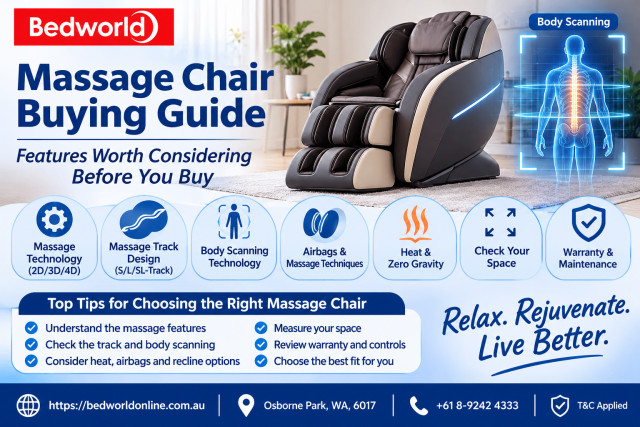 
Visit my Business Website
Welcome Visitor 3
To distribute this article more widely To manage this article or write your own article simply LOGIN
| ||||||
